Master the foundations of Linux — the backbone of every modern robotics system!
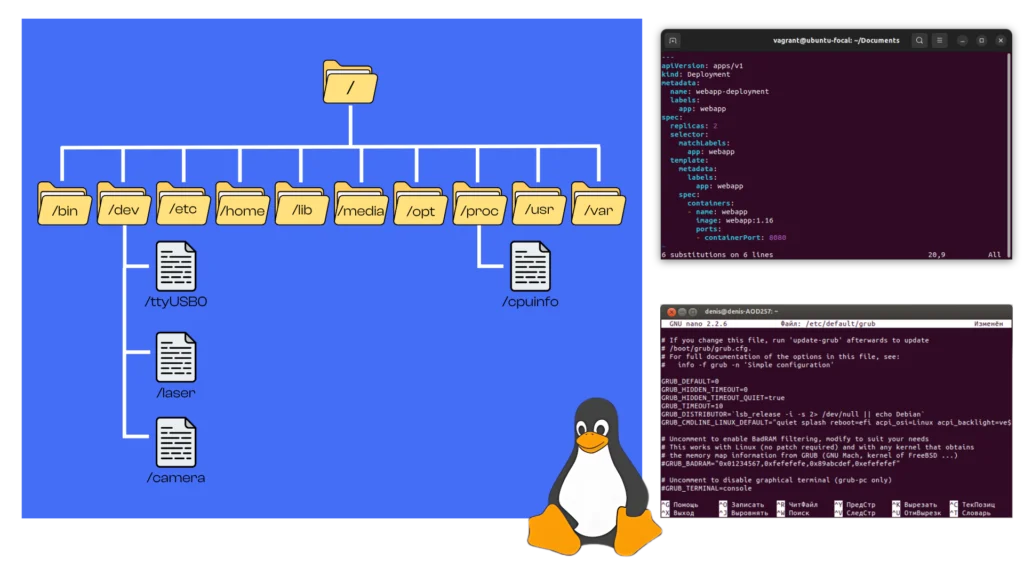
You’ll build a solid understanding of how Linux works under the hood. Learn how to manage software efficiently with package management tools, navigate and organize the filesystem like a pro, configure and troubleshoot networks, and handle users and permissions to keep your system secure. You’ll also discover how to connect remotely to your robot and automate tasks with powerful Bash scripts.
You won’t just follow commands — you’ll understand why they matter, gaining the practical Linux skills every robotics developer needs to create, deploy, and manage real robots.
Deploy and manage your robotics applications effortlessly with Docker, the industry-standard platform for building consistent and portable environments.
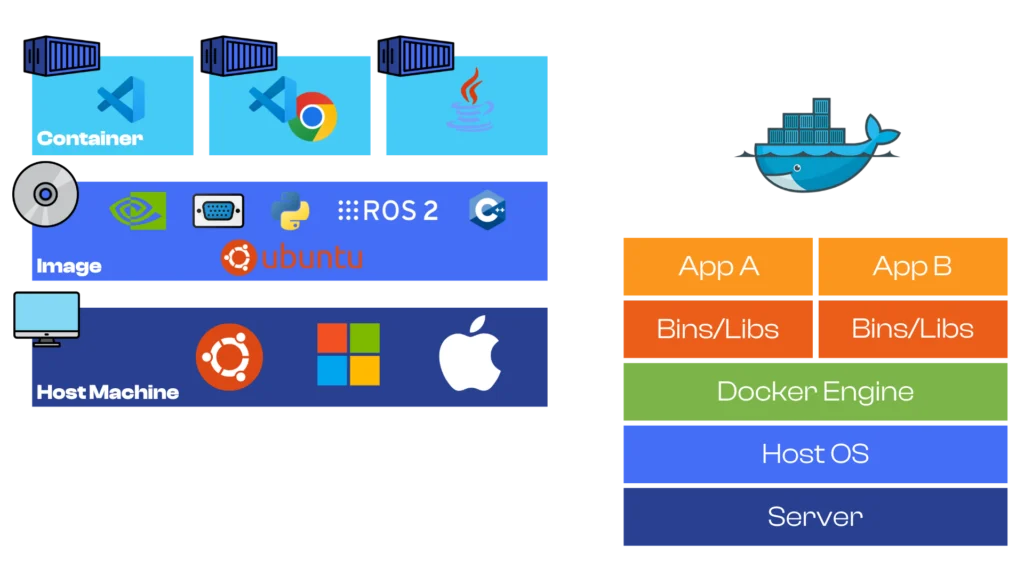
Understand how Docker architecture works and master the key components that make it so powerful — from containers and images to Dockerfiles. Learn how to store and share your projects using Docker Hub, manage data with volumes, configure container networking, and simplify multi-container setups with Docker Compose.
Collaborate, version, and manage your robotics projects like a pro using modern development tools.
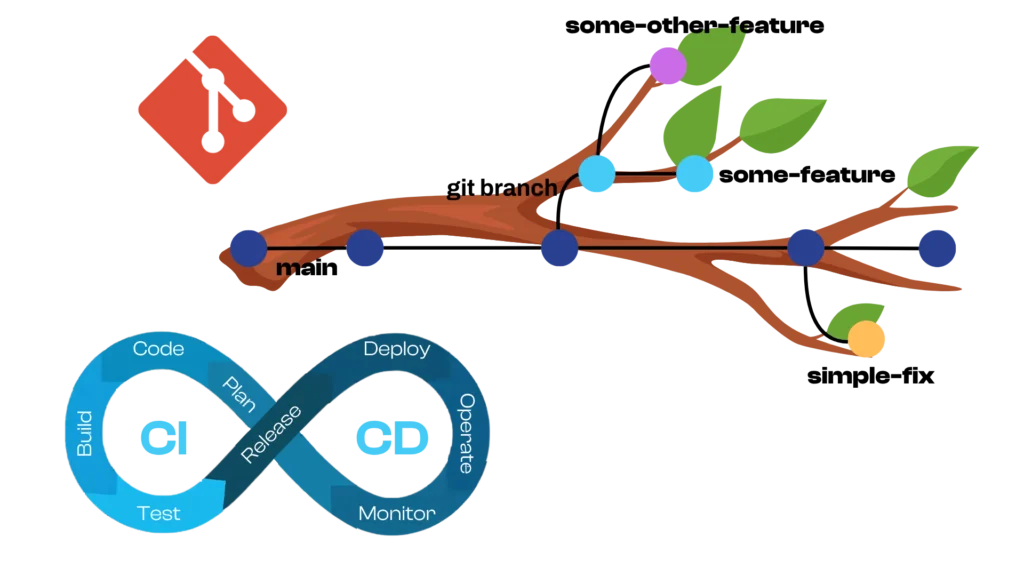
In this chapter, you’ll master Git — the most widely used version control system in the world. Learn how to create repositories, make commits, and work efficiently with branches to manage multiple development streams. Understand key workflows, how to rebase and fetch updates, and keep your project documentation clear and consistent. You’ll also set up Visual Studio Code as your main development environment, optimizing it for robotics and ROS 2 development.
Get started with ROS 2, the latest version of Robot Operating System!
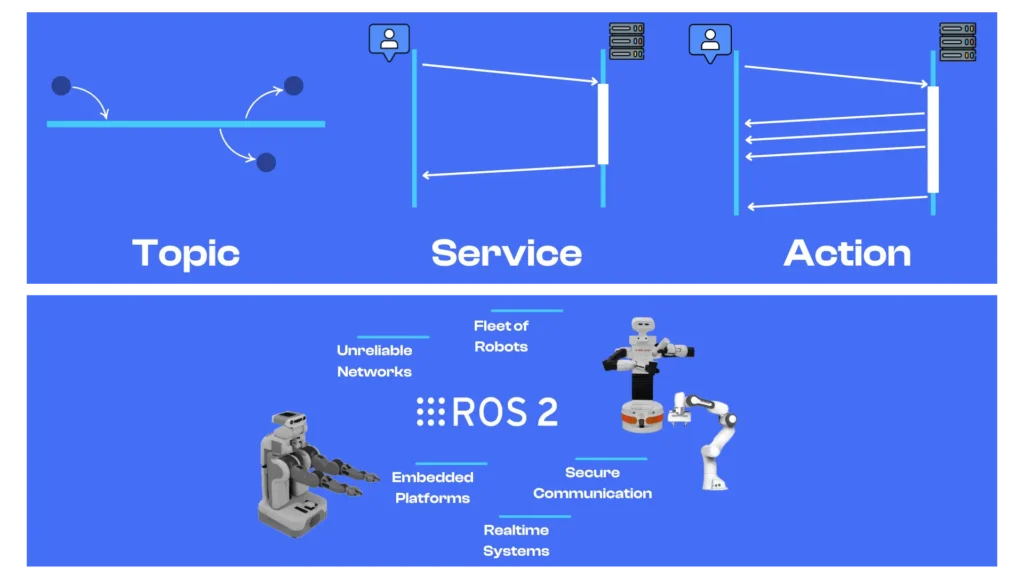
ROS is the most widely used framework for building all kinds of robots, from Manipulators, Autonomous mobile robots, Humanoids and Quadrupeds.
You won’t just learn theory! You’ll get your hands dirty, setting up a professional development environment and understanding the core concepts that power today’s most advanced robotic systems.
Bring everything together by configuring and running a real robot from start to finish.
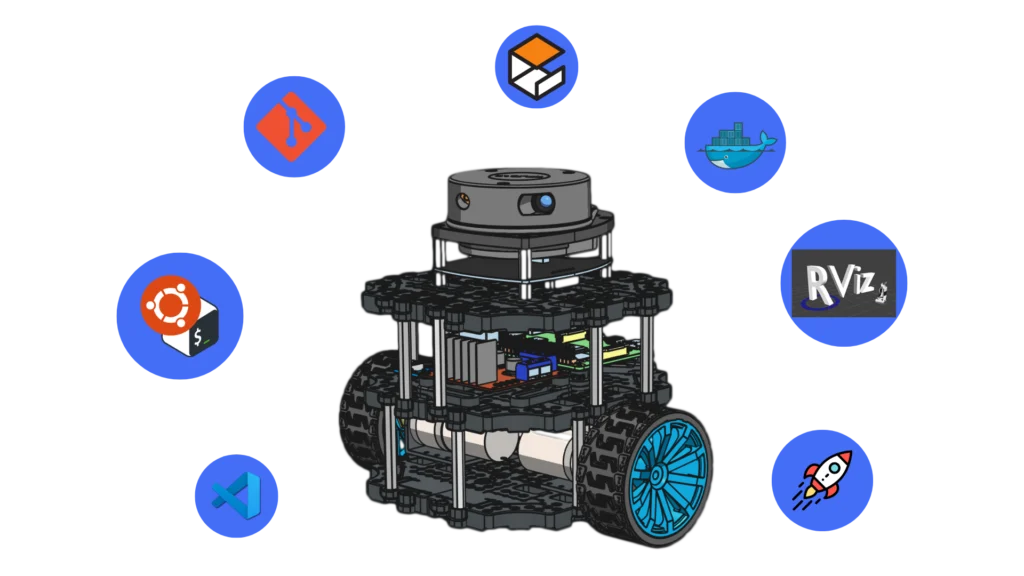
In this final chapter, you’ll apply all the concepts learned — from Linux and Docker to Git and ROS 2 — to set up a complete robotic system. You’ll connect to the hardware, deploy containers, manage the robot’s network, and launch real ROS 2 nodes on the device. By the end, you’ll have a fully operational robot that you’ve built, configured, and tested yourself, gaining the confidence to tackle real-world robotics projects.