
Configuring and Launching Controllers in ROS 2 with ros2_control
When a robotic system starts moving real or simulated actuators, it enters one of the most delicate phases of its entire architecture: control. In ROS 2, this responsibility is handled by ros2_control, a framework designed to manage the interaction between high-level software and hardware in a modular, extensible, and safe way. The goal of ros2_control […]
Managing Parameters in ROS 2: Dynamic Node Configuration with Python and CLI
When developing complex robotic systems, one of the most critical requirements is the ability to adapt software behavior without recompiling code. In ROS 2, this goal is achieved through parameters, a fundamental mechanism that enables nodes to be configured dynamically, safely, and flexibly. Parameters make it possible to separate node logic from configuration values. This […]
How to Manage Parameters in ROS 2 Using C++
👩🏻💻 Core Concepts, Practical Implementation, and CLI Tools In ROS 2 development, parameter management is a fundamental capability for building flexible, configurable, and adaptive robotic systems. Any autonomous robot must be able to modify its behavior without recompilation: sensor frequencies, maximum speed, module activation, safety limits, and numerous other factors depend on values that must […]
How to Create and Understand a URDF Model in ROS 2
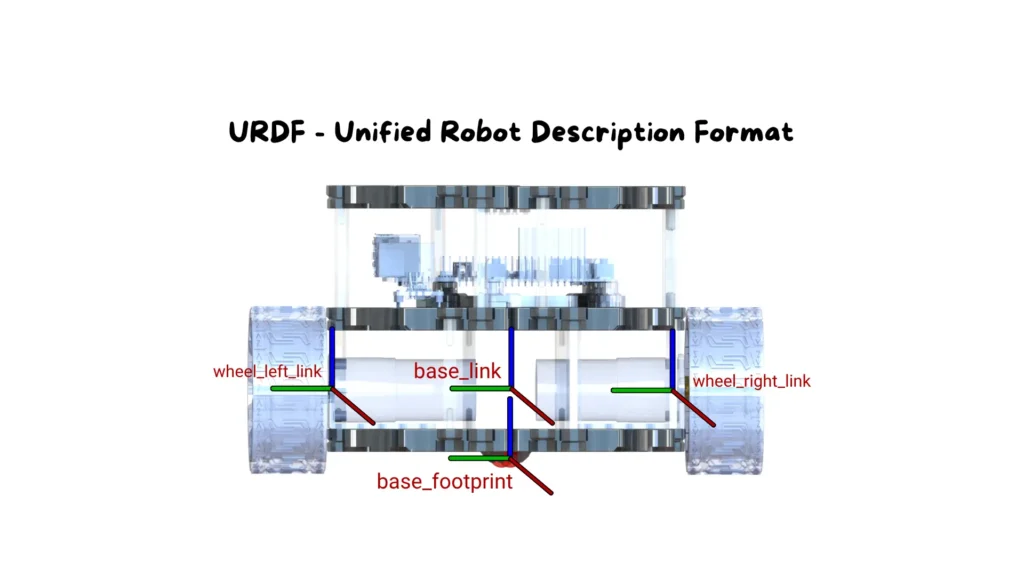
When working with ROS 2, sooner or later you reach the point where you must describe the physical structure of your robot in detail. This is a fundamental requirement: every component of the ROS 2 ecosystem—RViz, Gazebo, Nav2, controllers, planning libraries—needs to know the dimensions, connections, and shape of each element that makes up the […]
Creating and Managing a Lifecycle Node in ROS 2 with C++
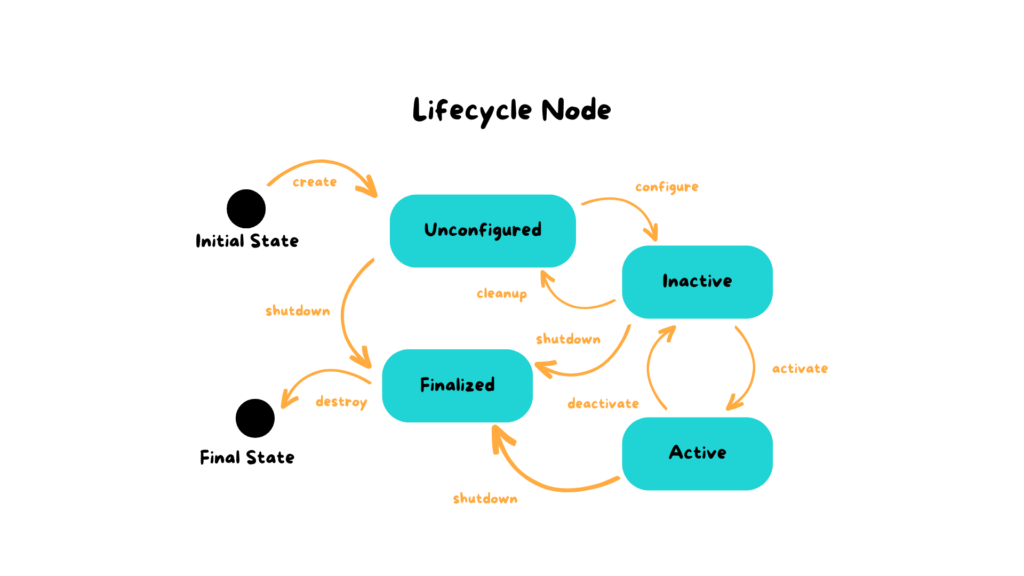
When developing complex robotic systems, managing the operational state of each node precisely is essential to ensure stability, safety, and predictability.ROS 2 introduces a key concept to meet this need: Lifecycle Nodes. Unlike standard nodes, which start operating as soon as they are launched, Lifecycle Nodes allow you to explicitly control their behavior through […]
Managing and Creating Lifecycle Nodes in ROS 2
When developing complex robotic systems, the ability to precisely control the operational state of each node is essential to ensure reliability, safety, and maintainability. ROS 2 addresses this need through a key concept: Lifecycle Nodes.Unlike regular nodes that start operating as soon as they are launched, Lifecycle Nodes allow you to manage their life cycle […]
Mastering Nav2 Costmaps in ROS 2: Static, Obstacle, and Inflation Layers Explained
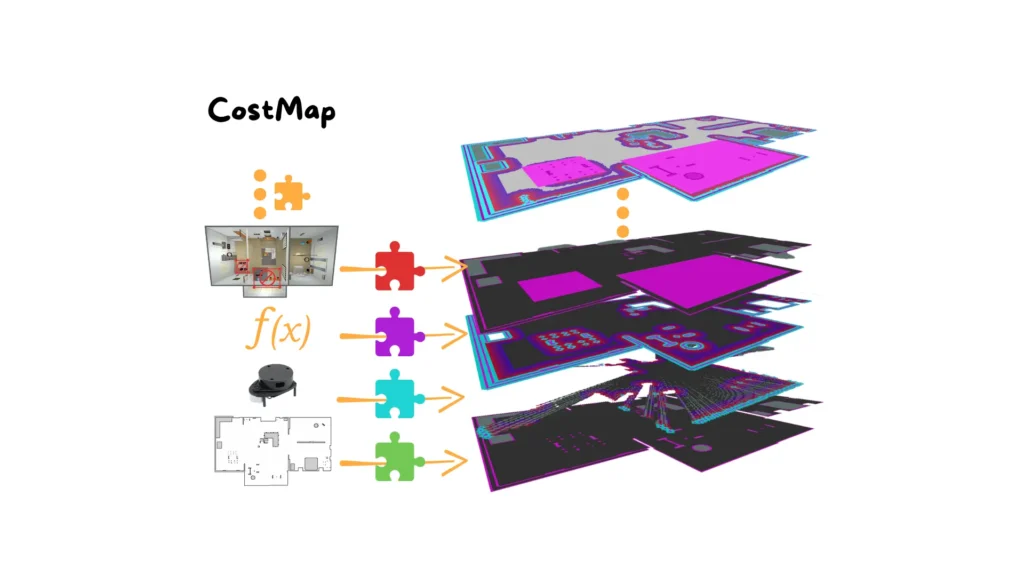
When we move from simple robot experiments to real-world navigation, the environment is no longer an abstract concept. A robot needs to understand where it can move, where it cannot, and how to plan paths that are not only valid but also safe and efficient. This is where costmaps come into play in ROS 2 […]
Building Smarter Robots with Behavior Trees in ROS 2
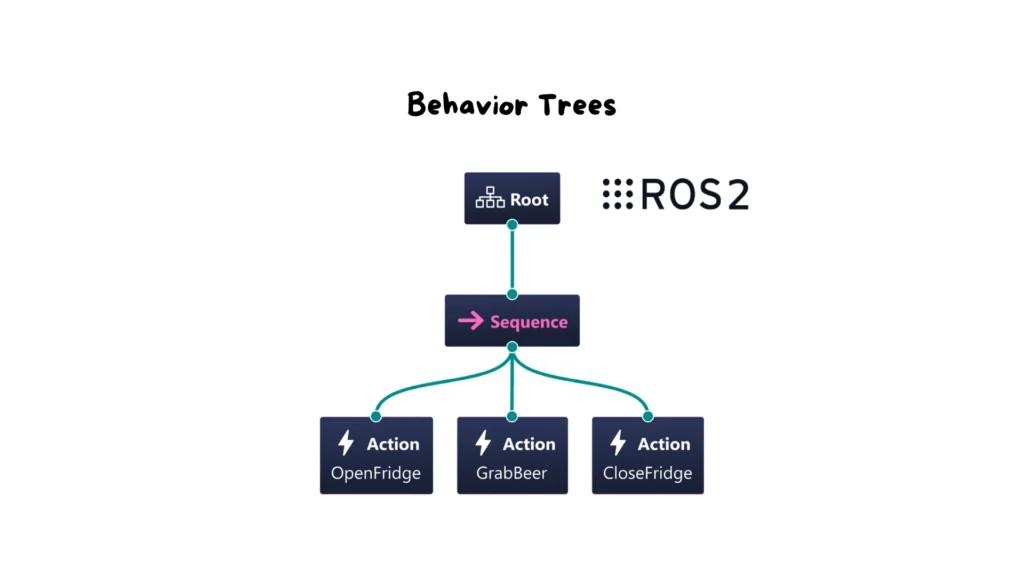
Discover how Behavior Trees can help you structure intelligent robot behaviors in ROS 2 using modular logic, clear control flow, and intuitive tools like Groot. 🤖 Why Behavior Matters in Robotics Robots that operate in the real world face much more than just navigation tasks. They need to handle dynamic environments, unpredictable humans, and ambiguous […]
Controlador Pure Pursuit
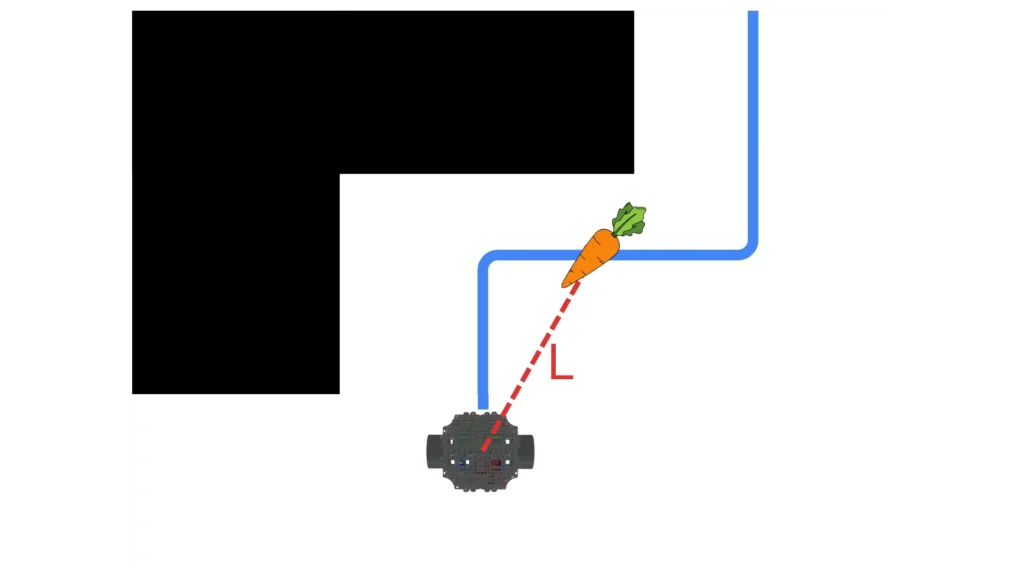
Introduction to Motion Planning Motion planning is a core component of autonomous robots that deals with finding and following a path for the robot to reach a goal safely. High-level (global) motion planners typically compute a static path through the environment, but real robots operate in dynamic environments where obstacles or conditions can change rapidly. […]
Mapeo con slam_toolbox
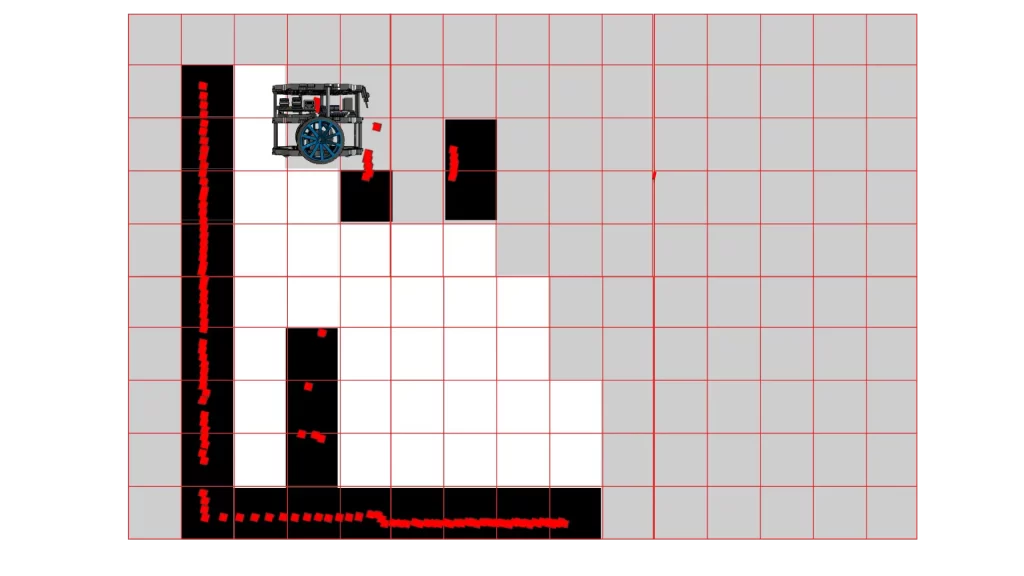
Autonomous mobile robots must both build a map of their unknown environment and localize themselves within it. Tackling mapping and localization as separate tasks often leads to drift and inconsistencies. The hard reality is: if you treat mapping and localization independently, your robot’s map will be unreliable, and localization will degrade over time. Simultaneous Localization […]

